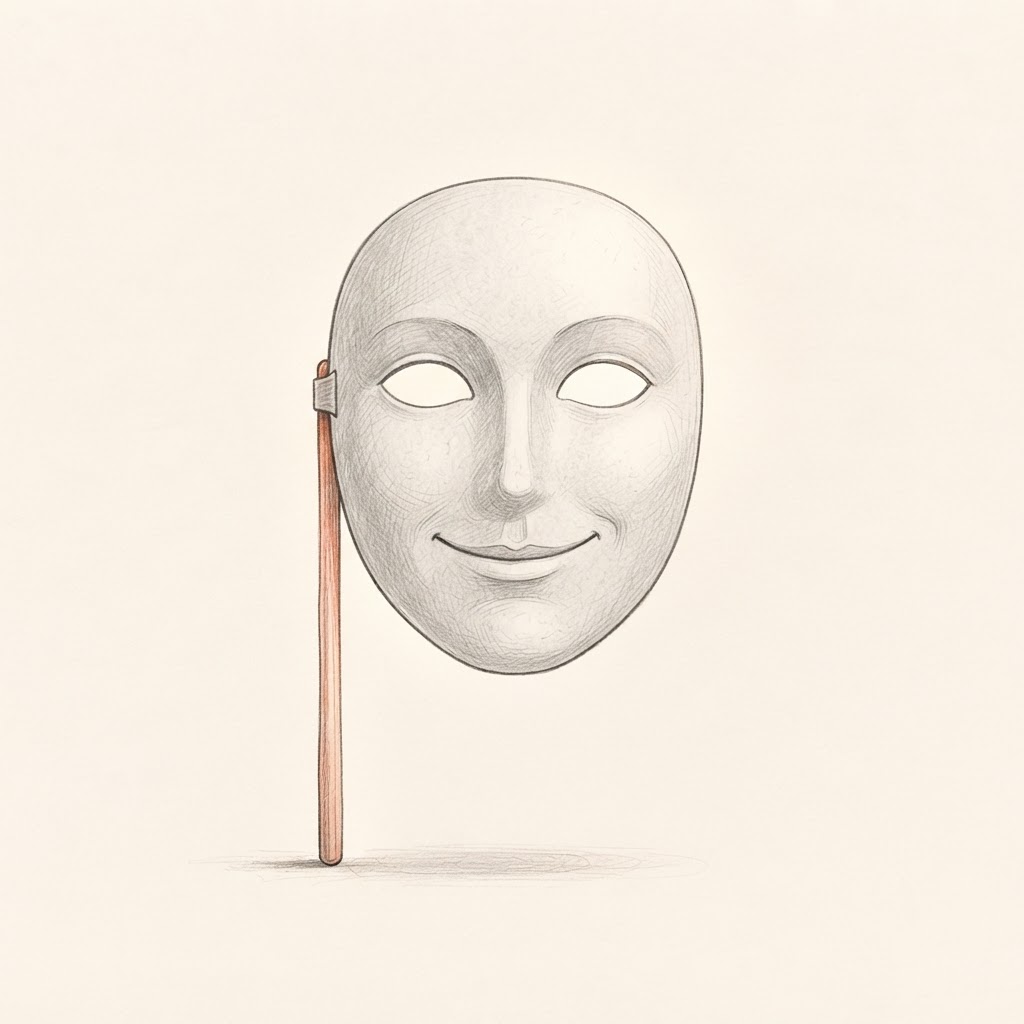
You've watched him work a room. He's funny, warm, generous with his time. People light up when he comes in. He remembers names, asks good questions, makes everyone feel like the most important person in the conversation.
And you stand there and think: I know this person. And I have no idea who this person is.
Because at home—in the private space, behind the closed door—it's different. Not different in ways you can easily explain. Different in ways that make you wonder if you're the problem.
The loneliness of being the only witness.
This is its own specific kind of hard. Not just that it's difficult at home, but that no one else sees what you see. His friends would be confused. His colleagues would be shocked. Even people who know you both would probably take his side, because the version of him they have access to is the good one.
So you don't say anything. Or when you try, the words don't capture it. You end up describing things that sound small—a comment, a tone, the way he handled one specific moment—and you can see on the other person's face that they don't quite get it.
Because what you're actually describing isn't a single incident. It's a pattern. And patterns are almost impossible to explain to someone who hasn't been inside them.
The loneliness isn't just that he treats you differently. It's that no one can see it. You're the only witness to the thing that's hurting you, and that makes you doubt yourself almost as much as he does.
Why the gap exists.
He does million-dollar deals. Manages people. Navigates complex social situations with precision. He is not incapable of being charming, warm, or considerate. He does it all day long at work.
That means the home behavior is not his only gear. It's a gear he uses in a specific context. With specific people. The ones he needs something from in public get the warm version. The one who sees him in private—the one who can't leave the way a client or a colleague can—gets something else.
That's not a reading of his character. It's just a pattern observation. The behavior changes based on audience. You're the audience that doesn't get the show.
What to do with this observation.
First: stop explaining it away. The gap is real. The fact that no one else sees it doesn't make it less real. You are inside the private dynamic. Your data is valid.
Second: notice what the gap is telling you. Not about who he is in some fixed, essential sense. About what this specific dynamic does and doesn't require from him. The public version is the version he produces when there are social consequences for anything less. The private version is what's left when those consequences aren't there.
The question that follows from that is not what's wrong with him. It's: what needs to change about what the private space requires of him. And that's a different question entirely. One that starts with you, not with him.
You're not imagining it. The gap is real. And the fact that you've been the only one to see it for this long is exactly why it's been so hard to trust what you know.